5 Online Scams to Watch Out for This Holiday Season
From gathering gifts to decorating every corner, your holiday schedule fills up fast. The last thing anyone wants is to deal with scammers trying to steal your online account information and money.
These “unwanted guests” are a nuisance even at the best of times, but during the holiday season, their behavior becomes even more extreme. That’s why we have a dedicated team of Googlers working around the clock to thwart these threats. We protect Gmail users from nearly 15 billion unwanted messages a day, blocking more than 99.9% of spam, Phishing, and Malware.
To help you stay particularly vigilant this holiday season, here is a quick guide to the scam emails and “red flags” you should watch out for:
1. Gift Cards and Giveaways
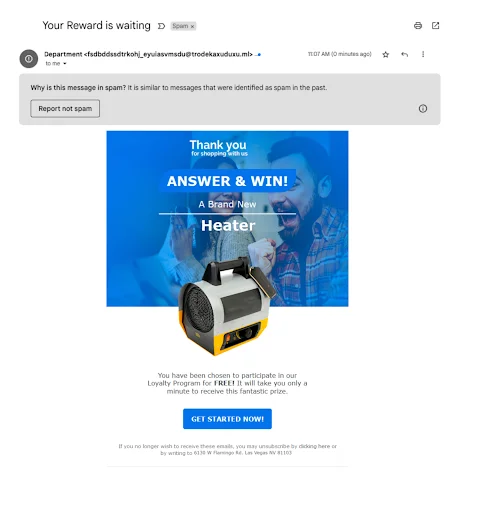
When the shopping season peaks, gift card and giveaway schemes also intensify. Scammers may try to trick you into buying a gift card—sometimes using the name of a familiar contact—or offer a free prize in exchange for your credit card information. If you receive an email from a friend asking you to buy a gift card, send them a quick text message to confirm. And if a giveaway looks too good to be true, it’s probably a scam.
2. Charity Scams
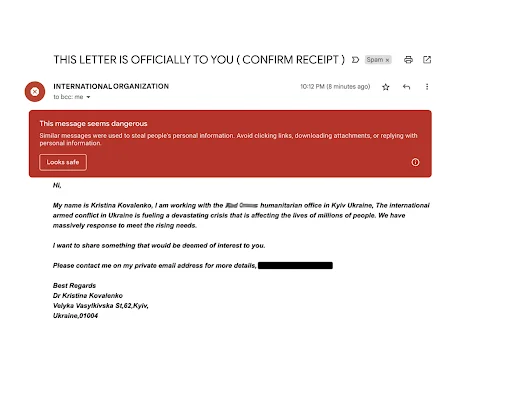
Attackers show no restraint even during the season of giving. In fact, charity-related scams and Phishing attempts increase at this time of year. Whether it’s a supposed charity linked to current news or an organization with a familiar name, be cautious if someone asks you to contact them via a personal email or send money directly.
3. Demographic Targeting
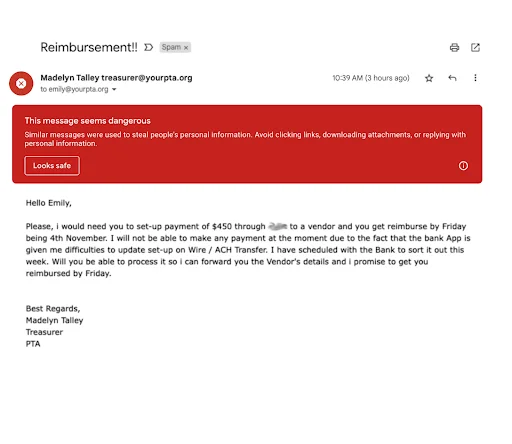
Some of the most malicious schemes are specifically targeted at you. These scams can feel more personal because they contain specific elements of your life or identity. Whether it’s faking communications from local organizations or sending scam emails to specific age groups, keep your eyes wide open for identity-based malicious emails.
4. Subscription Renewals
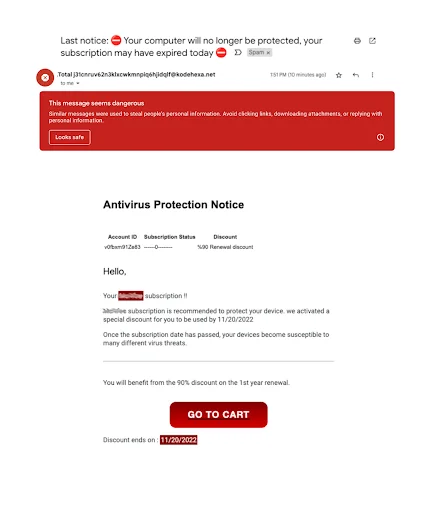
Toward the end of the year, subscription renewal scams can spike. A particularly unwelcome version of these emails fakes antivirus services, tricking victims with promises of improved security. While some scammers can make their messages look very convincing, always check the sender’s email. If it looks suspicious, it probably is.
5. Crypto Scams
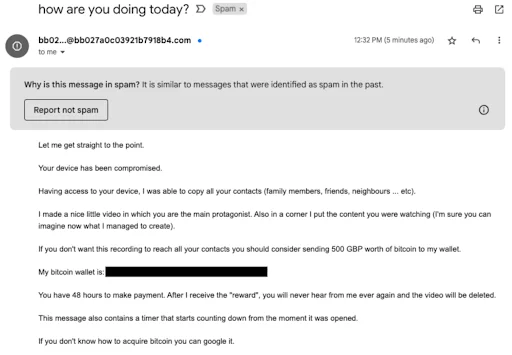
An entire class of fraud, crypto-based schemes, can flourish at this time of year. A common variation of these schemes uses a cryptocurrency wallet to receive payment and often tries to extort the victim through threats. Gmail may warn you about these nonsensical demands, but it’s also important to know how to recognize them. Some major “red flags” include typos, email addresses that look strange, or urgent payment demands.
While the range of malicious activity can be dizzying, Gmail helps you block these and countless other unwanted campaigns. Digital protection mechanisms in Gmail, including advanced Phishing and Malware controls, are turned on by default.
Keep these “Golden Rules” in mind to avoid becoming a victim of holiday fraud:
- Slow it down. Scams are often designed to create a sense of urgency. Take time to ask questions and think.
- Double-check. Do your research to verify the details. Does what you’re being told make sense?
- Stop! Don’t send. No reputable person or agency will demand payment or your personal information on the spot.
Source: Google Blog

Geosoft Blogger
Cloud First Technology.
